
The Cultural Triangle covers the north-central region where ancient Sinhalese kingdoms flourished. The area includes UNESCO World Heritage sites with ruins dating back over 2,000 years. Massive stupas, rock fortresses, irrigation systems, and cave temples showcase advanced civilizations that thrived here. Most visitors spend 3-4 days exploring the main sites, though you could easily stay longer.
Anuradhapura: The Ancient Capital
Anuradhapura served as Sri Lanka’s capital for over 1,000 years, from the 4th century BC. The sprawling site covers a large area with ruins scattered across several square kilometers. Plan a full day to see the main attractions properly.
The Sri Maha Bodhi is a sacred fig tree grown from a cutting of the tree under which Buddha attained enlightenment. It’s over 2,300 years old, making it the oldest documented tree in the world. Pilgrims come daily to worship and make offerings.
The Dagobas
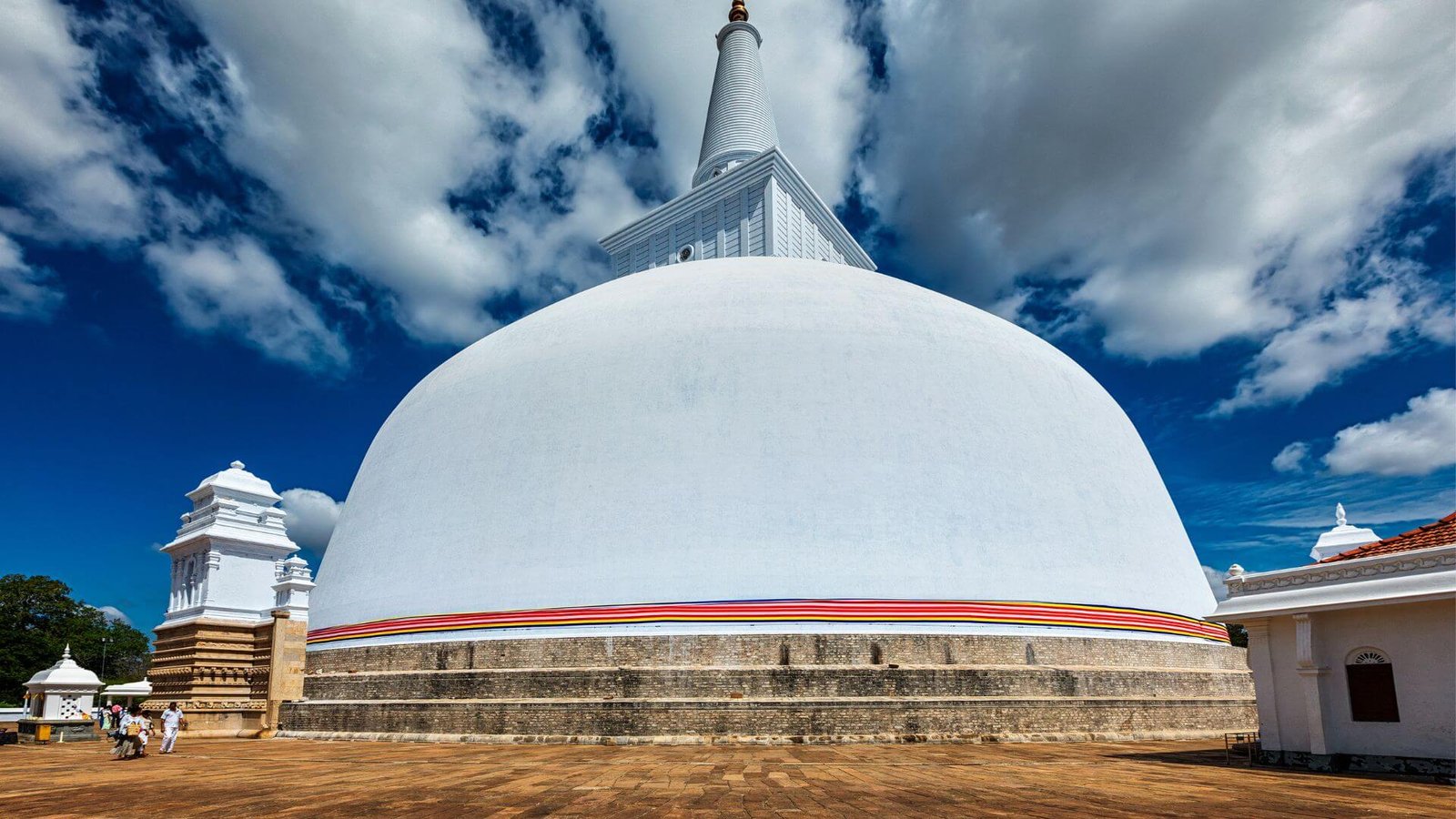
Anuradhapura has several massive dagobas (stupas) that dominate the landscape. Ruwanwelisaya, painted brilliant white, rises 103 meters. The original construction dates to the 2nd century BC, though it’s been renovated multiple times.
Jetavanarama once stood even taller at 122 meters, making it one of the tallest structures in the ancient world. The brick dome is impressive even in its partially restored state. Abhayagiri dagoba is equally massive, located in a peaceful setting with fewer tourists.
Getting Around
The site is too large to walk. Most visitors hire a tuk-tuk for 3-4 hours to drive between monuments. Bicycles work but it’s hot and distances are significant. Bring water and sun protection—shade is limited.
Dress modestly and remove shoes at sacred sites. The area is active for worship, not just tourism. Early morning or late afternoon offers cooler temperatures and better light for photography.
Polonnaruwa: Medieval Splendor
After Anuradhapura declined, Polonnaruwa became the capital in the 11th century. The ruins here are more compact and better preserved. You can cover the main sites in half a day, though a full day allows for proper exploration.
The Royal Palace complex shows the scale of medieval Sri Lankan architecture. The audience hall with its carved stone elephants and the bathing pool called Kumara Pokuna are highlights.
Gal Vihara
The Gal Vihara rock sculptures are Polonnaruwa’s masterpiece. Four Buddha figures carved from a single granite face show exceptional artistry. The standing and reclining Buddhas are particularly impressive for their size and detail.
Photography is allowed but requires covering shoulders and knees. The carvings look different depending on light—morning or late afternoon light brings out details better than harsh midday sun.
Vatadage and Other Structures
The Vatadage (circular relic house) at the Quadrangle is an architectural gem with concentric circles of stone columns. Intricate moonstones and guard stones show the craftsmanship achieved during this period.
Rankot Vihara dagoba and Lankatilaka temple are also worth visiting. The site works well for cycling—many tourists rent bikes and pedal between ruins, which is pleasant if weather cooperates.
Sigiriya: The Rock Fortress
Sigiriya is the most iconic Cultural Triangle site. King Kashyapa built a fortress atop this 200-meter rock in the 5th century AD, creating gardens, frescoes, and a palace at the summit.
The climb takes 45 minutes to an hour. Metal staircases wind up the rock face—spectacular but challenging if you fear heights. About halfway up, you’ll see the famous Sigiriya frescoes of celestial maidens painted on a sheltered rock face.
The Mirror Wall, once polished so smooth it reflected like a mirror, is covered in ancient graffiti—verses written by visitors over 1,000 years ago. You can’t touch it now, but you can read translations of the inscriptions.
The Summit
The Lion’s Paw gateway, where massive lion paws flank the final stairs, marks the last approach to the summit. The lion’s head and body have eroded away, but the paws remain impressive.
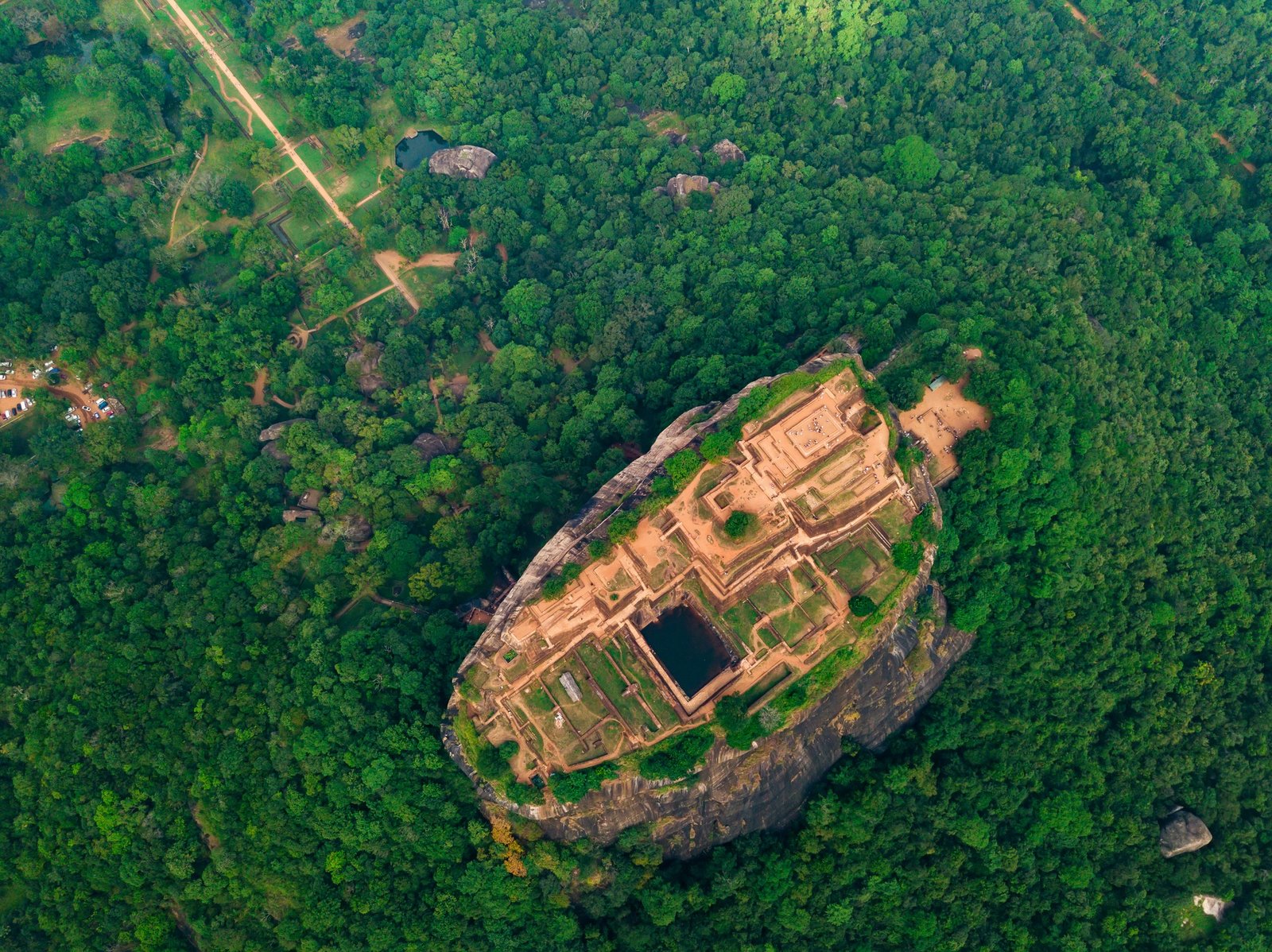
At the top, palace foundations, water cisterns, and throne platforms spread across the flat summit. Views extend across forested landscape and distant mountains. It’s easy to understand why Kashyapa chose this location.
Visiting Tips
Go early—the site opens at 7 AM. You’ll avoid crowds and heat. By midday, stairs are packed and temperatures soar. Afternoon is possible but still hot. Wear shoes with good grip for the metal stairs.
Dambulla Cave Temple
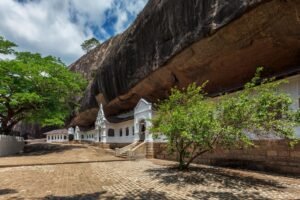
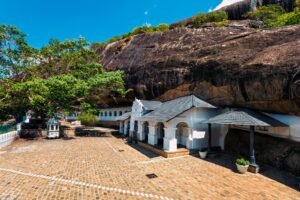
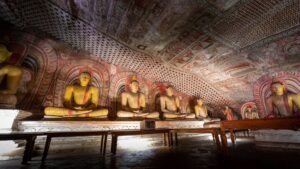
Dambulla’s golden temple sits on a hill overlooking the plains. Five caves carved into the rock contain over 150 Buddha statues and extensive murals covering the ceiling and walls.
The cave paintings depict Buddha’s life and various deities. Some frescoes date back 2,000 years, though many were repainted later. The reclining Buddha in the largest cave measures 14 meters long.
Climb up to the caves in the morning when temperatures are cooler. The site requires modest dress and no shoes. Stone walkways get hot underfoot by afternoon. Allow 1-2 hours to see all five caves properly.
Pidurangala: The Alternative View
Pidurangala Rock sits opposite Sigiriya, offering excellent views of the fortress from across the valley. It’s less developed, cheaper, and quieter than Sigiriya itself.
The climb takes 30-45 minutes with some scrambling over boulders near the top. A cave temple partway up houses a large reclining Buddha. The summit provides unobstructed views of Sigiriya, making it popular for sunrise and sunset.
Ritigala: Off the Beaten Path
Ritigala is a mountain monastery complex that few tourists visit. Forest-covered ruins hide among the trees, connected by ancient stone pathways. The site has a mystical atmosphere—isolated, quiet, and overgrown.
Monks lived here in seclusion, following strict ascetic practices. The double-platform structures are unique to Ritigala, with purposes still debated by archaeologists. Visiting requires a guide and takes 2-3 hours of walking through forest.
Mihintale: Buddhism’s Birthplace in Sri Lanka
Mihintale is where Buddhism was introduced to Sri Lanka in the 3rd century BC. King Devanampiya Tissa met the monk Mahinda on this mountain, leading to Buddhism becoming the island’s dominant religion.
The site involves climbing 1,840 steps up the mountain, with stupas, caves, and ruins along the way. The summit offers views across the countryside. It’s an important pilgrimage site, especially during Poson Poya in June when thousands make the climb.
Practical Logistics
The Cultural Triangle cities (Anuradhapura, Polonnaruwa, Sigiriya area) are connected by good roads. Most visitors base themselves in Sigiriya or Habarana for easy access to multiple sites.
A “Cultural Triangle round ticket” covers some sites at a reduced rate compared to individual entry. If visiting multiple locations, check if this saves money. Individual tickets work fine if only seeing selected sites.
Weather Considerations
The Cultural Triangle is hot year-round. Mid-day temperatures often exceed 35°C (95°F). Early starts are essential for comfort and avoiding crowds. Drink plenty of water—dehydration happens quickly when climbing ruins in sun.
Bring a hat, sunscreen, and lightweight long clothing. Monkeys are common at many sites—secure loose items and food. Don’t feed them or leave bags unattended.
How Long to Spend
A rushed itinerary covers Sigiriya, Dambulla, and either Anuradhapura or Polonnaruwa in 2 days. This works if you’re short on time but involves long days.
Three to four days allows proper exploration without rushing. You can see the main sites, add lesser-known locations like Ritigala or Mihintale, and have time to absorb what you’re seeing. Village experiences or cycling tours add variety to temple visits.
Cultural Triangle in Your Tour
Our itineraries typically spend 3-4 days in the Cultural Triangle, covering major sites with a comfortable pace. We include experienced guides who explain historical context and archaeological significance rather than just pointing at ruins.
Accommodation options range from budget guesthouses to boutique hotels with views of Sigiriya Rock. We select places based on comfort, location, and value. Transport between sites is included, so you don’t waste time figuring out logistics.
The Cultural Triangle gives you context for understanding Sri Lankan Buddhism and ancient civilization. Combining these historical sites with natural attractions and coastal areas creates a well-rounded trip that shows different aspects of the island. Whether history is your main interest or just part of a broader tour, these ancient cities deserve time on your itinerary.